The Albany Loop: Shape and Spacing on WA's South Coast
Western Australia's south-west corner is a loop with four names on it — Albany, Denmark, Margaret River and Augusta — and almost every guide to it treats those names as a list. The list is the least useful thing about it. What decides the trip is the shape: a coast road that runs west from Albany, a wine country that sits inland from it, and a corner at Cape Leeuwin where the two meet.
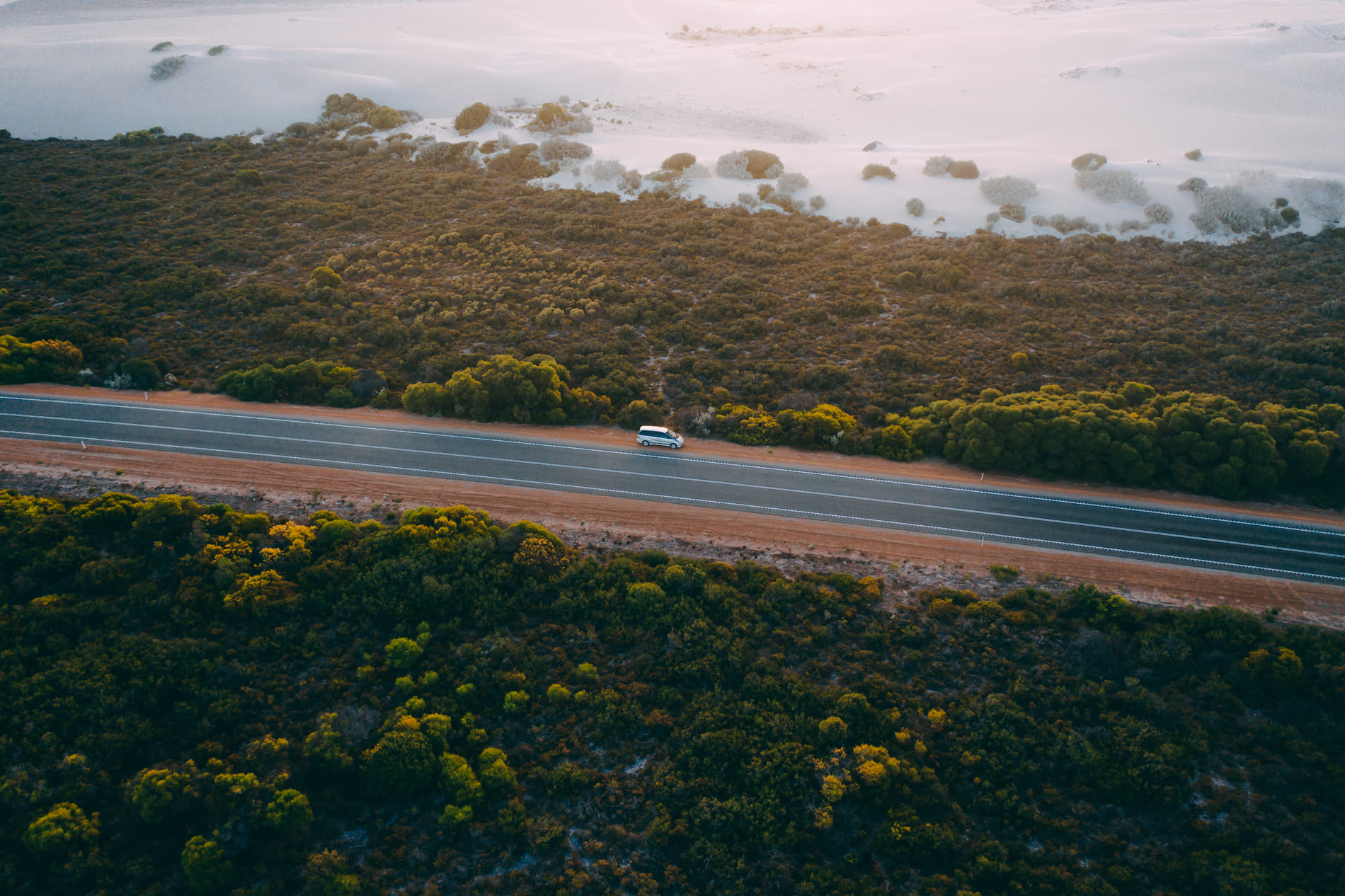
A loop is a different planning problem from a line
On a linear drive, the decisions are about how far along you are. On a loop, they are about which side you do and which side you cut, because a loop can be entered at more than one point and driven in either direction. That is why the south-west repays an hour of thinking before you book anything.
The four names are not evenly spaced and not the same kind of place. Albany is a town with a harbour and a convict history. Denmark is small, green and close to the coast. Margaret River is wine country with a town at its centre. Augusta is small, and useful mainly because of where it sits.
Treating those four as equivalent stops is the mistake. Two are places you stay for several nights, one you pass through slowly, and one is a hinge.
The shape, and why direction matters
The loop runs from Perth south to Albany, west along the coast through Denmark to Margaret River, on to Augusta at the corner, and north back to Perth. Driven anticlockwise it is a coast-and-country loop; clockwise it is the same road in the opposite order, and not the same trip. Check current road conditions and closures with Main Roads Western Australia before committing to a direction.
The difference is where the long drives fall. Anticlockwise, the longest push is at the start, on the inland highway south, when you are fresh and the van is new to you. Clockwise, it comes at the end, on the return north, when the temptation to just get home is strongest. That is the argument for anticlockwise, and it is why most people run it that way without quite knowing why.
| Leg | Character | What it decides |
|---|---|---|
| Perth south to Albany | Inland highway through farmland and timber country | The long transit. It sets how much of the first day is driving rather than stopping. |
| Albany to Denmark | Coast and forest, short distances, many turn-offs | Where the trip stops being transport and becomes a place to be |
| Denmark to Margaret River | Coast on one side, wine country inland | The choice between a coastal road and an inland one, and it is a real choice |
| Margaret River to Augusta | Short, wine country easing into the corner | Where the coast turns north and the loop closes |
| Augusta north to Perth | Coast road back up, longer than it looks | The return, which is the leg most often under-planned |
What each leg of the loop is actually for
Note what the table does not do: it gives no distances. They are published by the state road authority and by any current map, and a guide written a decade ago cannot be trusted for them. Look them up when you plan.
Albany is the anchor, not the first stop
Albany sits on a harbour on the south coast, and it is the oldest colonial settlement in Western Australia, which gives it a built history the rest of the region does not have. Its convict and military past is legible in the town itself — check with the local visitor centre for which sites are open and what they charge, since those arrangements change.
It is also where the coastline changes character. The granite and swell around Albany are a different proposition from the sheltered water further west, and the coastal walking is the reason to give the town more than a night. Ask locally which reserves and beaches are accessible on the day, because access and closures change.
Albany is also a supply town at the eastern end of the interesting part of the loop: after it, the towns get smaller. Stock up before you head west rather than assuming Denmark or Margaret River will have the specific thing you need.
Denmark and the coast between
Denmark is small, and the country around it is the best of the region: tall forest inland, granite coast at the edge, and beaches and inlets that reward slow driving rather than a schedule. This is where the loop stops being about getting somewhere.
The spacing here is short and dense, which changes how you plan. On the long legs you plan fuel; here you plan time. A dozen turn-offs in a short stretch means the day is decided by how often you stop, not how far you go, and a two-person camper suits that because it can pull into a small car park and turn around without a scene.
It is also where weather is most likely to change your plan. The south coast takes swell and wind that the sheltered parts of the region do not, and a beach glorious in the morning can be unpleasant by afternoon. Keep two options rather than planning around one beach.
The inland choice at Margaret River
Between Denmark and Margaret River there is a genuine fork, the only real route decision on the loop. One way keeps you on the coast; the other cuts inland through wine country and forest and arrives from behind rather than from the sea.
The coastal route is about the water and the settlements strung along it. The inland route is about the country that made the region's reputation: vineyards, karri forest, a landscape green in a way the coast is not. Neither is the compromise option, so choose on what you want from the day rather than on which is faster.
A practical note for anyone driving a camper: wine country roads are narrow, often unsealed at the edges, and busy with vehicles turning in and out of small car parks. A short van is easier here, and not stopping on a blind corner is more useful than any list of cellar doors.
Augusta and the corner
Augusta is a small town at the south-western corner of the continent, and its significance is geographic rather than urban. Cape Leeuwin, south-west of it, is where the coastline turns from running east-west to running north-south. Standing there is the moment the loop becomes comprehensible: everything since Albany was the south coast, and everything ahead is the west.
The town itself is quiet and it is the last place before the return north, which makes it a sensible final night rather than a destination — and the point at which to be honest about how much driving is left. The return leg is longer than the map suggests because there is nothing at the end of it except Perth.
Where the nights should fall
The loop's rhythm is uneven, and spacing the nights evenly is what makes it feel rushed. Two clusters carry most of the value: the Albany-to-Denmark stretch, and the Margaret River area. The transit legs and the corner do not need equal time.
- Give Albany two nights if the history and the coastal walking matter, one if they do not.
- Give the Denmark stretch the time you saved, because this is where short drives and many stops pay off.
- Do not split the Margaret River nights between two bases; pick one and drive out from it.
- Treat Augusta as a night of convenience at the corner rather than a place to build a stay around.
- Leave the return north unplanned for the first half, so a good morning does not become a deadline.
Camping here follows the same logic as anywhere in the state: national park campgrounds are managed and booked by the parks service, and popular ones in peak periods need booking well ahead. Rather than rely on a list, check the service's own page for each campground you intend to use, and the local council for anything outside the park system.
Vehicle, and the two ends of the map
A two-person camper is well matched to this loop. The driving is not extreme, the roads are mostly sealed, and a small vehicle gets you into the tight car parks the coast and wine country are full of. What it does not give you is space, and a week is long enough for that to matter — so one crate and one bag holds for the whole loop.
Perth is the practical start and end for almost everyone. Read the operator's own depot page for campervan hire in Perth before you commit to a pickup time. The depot's hours decide whether the first day is a driving day or a half day, and on a loop where the longest transit is at the start, that shapes the whole trip.
One closing note on direction, since it is the cheapest decision on the list. Run the loop anticlockwise: put the long inland transit at the beginning, and let the return north be the short, reluctant end of the trip. It is not a rule, just the arrangement most people arrive at after doing it the other way.
Questions people ask
- Which direction should the Albany loop be driven?
- Anticlockwise, which puts the long inland transit from Perth to Albany at the start of the trip and leaves the return north as the final leg. That way the biggest driving day happens while you are fresh and the van is new to you, rather than at the end when the pull to get home is strongest. It is a preference rather than a rule, but it is the arrangement most people settle on.
- How long does the Albany loop take?
- Long enough that the nights should be unevenly distributed. The two clusters that carry most of the value are the Albany to Denmark coast and the Margaret River area, and the transit legs need less time than either. Rather than fix a total, decide how many nights the coast and the wine country each get, then fit the driving around them and check current distances against a map or the state road authority.
- Is the coast or the inland route better between Denmark and Margaret River?
- They do different things and neither is the compromise option. The coastal route is about water and the small settlements along it; the inland route is about vineyards, karri forest and the country that built the region's reputation. Choose on what you want from the day. Wine country roads are narrow with busy small car parks, so a short vehicle helps and stopping on a blind corner does not.
- Do you need to book campsites on the south-west loop?
- For national park campgrounds in Western Australia, bookings are handled by the state parks service, and popular sites in peak periods need booking ahead. Rules outside the park system are set by local councils and other land managers, and they vary. Check the managing body's own page for the specific campground rather than relying on a list, and confirm before you travel rather than on arrival.
- What is at Augusta and Cape Leeuwin?
- Augusta is a small town at the south-western corner of the continent, and Cape Leeuwin south-west of it is where the coastline turns from running east-west to running north-south. The lighthouse marks the corner. It is the point at which the loop becomes comprehensible, and a sensible last night before the return north rather than a place to build a stay around.
Where these facts come from
- Wicked Campers — campervan hire in Perth
- Parks and Wildlife Service WA — camping
- Parks and Wildlife Service WA — park entry fees
- Main Roads Western Australia — travel and road information
Details like booking rules, fees and closures change. Check the authority above before you rely on any of it for a specific date.