Your First Road Trip in a Small Camper: What to Sort Before You Leave
The first night in a small camper is where most of the trip's problems announce themselves: the bag with nowhere to go, the thing you assumed was included, the campsite you did not know needed booking. None of that is difficult to prevent. It just has to be decided in the right order, at home, while you still have options.
There is a temptation, once the booking is confirmed, to treat the rest as shopping. Buy the stove, buy the bedding, buy the clever folding thing, pack it all in. That sequence is backwards. What you pack is decided by what the van already has, and what the van already has is a question with a written answer that you can get before you leave.
So the five stages below run in dependency order. Each one narrows the next. Do them out of order and you will redo the packing at least once, usually in a car park, usually in the heat.
First: find out what the van does and does not include
A small camper is a compromise built to a size, and the compromises are not standard across operators or across vehicles within one fleet. Two vans that look the same in a photograph can differ on bedding, on cooking, on whether there is any way to plug in at a powered site. None of that is guessable from the picture, and all of it changes what you carry.
Get the answers in writing before you pack, and ask them as specific questions rather than as an open request for a list. The vague version gets a vague answer, and a vague answer is how people end up buying a second set of plates in a supermarket on day one.
| Ask | Because it decides |
|---|---|
| Is bedding included, and what exactly does that cover? | Whether you bring a sleeping bag, a pillow, or nothing at all |
| What cooking equipment is in the vehicle, and what fuel does it use? | Which stove, pans and fuel you buy, if any |
| Is there a fridge or cooler, and how is it powered? | Whether you can carry fresh food past day two |
| Can it connect to a powered site, and what cable is needed? | Whether a powered night is an option at all |
| How does the bed convert, and what has to move to do it? | Where bags can live without being lifted twice a day |
| Are chairs, a table or an awning included? | Whether you buy them or do without |
| What is excluded, restricted or charged as an extra? | The gap between the quoted vehicle and the usable one |
The questions worth asking before you pack anything
The last row is the one people skip. Anything listed as an extra is a decision, not a detail, and deciding it at the depot counter with a queue behind you is the worst possible moment. Decide at home, in daylight, with the option to source it yourself.
Second: pack to a footprint, not to a list
Packing lists are written for the trip you imagine. A footprint is what the van can actually hold while remaining a place to sleep and cook. In a two-person camper, that means the bags need a home that is not the bed, and the food needs a home that is not the floor. Everything else is negotiable.
The system that works is fewer containers, not more organisation. Two soft bags that compress beat four rigid cases that stack, because a soft bag can be pushed into a shape the van has and a hard case cannot. One crate for food, one bag for clothes, one small bag for the things you need every day, and a rule that nothing else comes in without something coming out.
- Test the bed conversion at home in your head: if two bags have to move to make the bed, they will move twice a day for the whole trip.
- Pack clothes as a fixed set for the number of days between laundries, not for the length of the trip.
- Keep cooking, bedding and clothing in separate containers so a wet day does not spread through everything.
- Put the daily items, torch, charger, water bottle, sun cream, in one bag that never gets buried.
- Bring fewer shoes than you think, and one pair that can get muddy without consequence.
- Take one warm layer more than the forecast suggests, because a small van loses heat quickly after dark.
The test is not whether it fits at the depot. It is whether you can cook a meal and get into bed without moving anything twice. If that fails on day one it fails every day, and the fix gets harder once you have bought things along the way.
Third: plan fuel and water for the stretches that have neither
On a populated coast, fuel is a habit and water comes out of a tap. On a long inland stretch, both become a calculation with the same structure: how far to the next reliable source, and how much margin you are carrying. The trap is treating a settlement on the map as a guarantee. A place can exist, appear on a sign, and still have no fuel that day.
Plan around the gaps rather than around the total distance. Identify the long sections, mark the last place before each one where you can refill both, and decide in advance that you will top up there rather than at the point where the gauge starts to matter. Water is the same discipline, with one difference: you can carry a spare container of water in a way you cannot carry a spare tank of fuel.
The other half of this stage is time. A day planned around a distance assumes no stops, no roadworks and no wildlife at dusk. Plan the day around arriving before dark, when you can still see the ground you are parking on, and the fuel and water questions get easier because you are not improvising at the end of a long drive.
Fourth: know where you may legally sleep, before you are tired
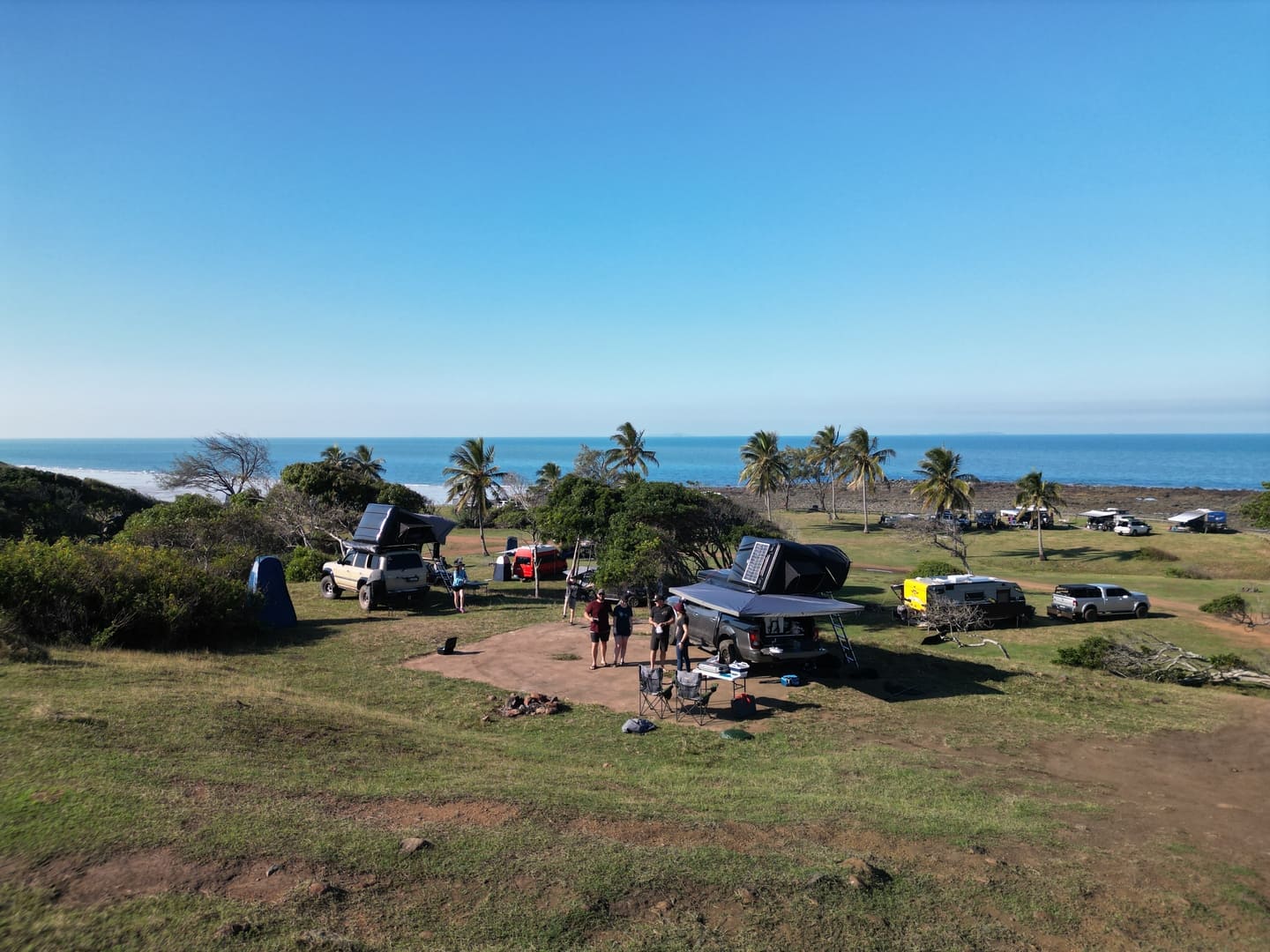
This is the stage most first-timers get wrong, and it is not their fault: there is no single national answer. Camping rules are set by whoever manages the land, which means national park agencies, state agencies, local councils, and private landholders all have their own. The rules differ between them and can change with the season.
Two things follow. First, a place being used by other vehicles is not evidence that sleeping there is permitted. Second, the rules change, so any guide, including a printed one you bought this year, needs checking against the managing agency's current page for that specific site.
Parks Victoria campgrounds, for example, are bookable online and the popular ones require advance booking, with bookings opening on a published release schedule for peak periods such as summer school holidays, Easter and long weekends. Booking arrangements changed from 1 July 2026 for some campsites, which is exactly the kind of detail that makes an older guide unreliable rather than merely dated. Other states and territories run their own systems, and you should go to each one directly for the parks you plan to use.
The practical habit is to settle tonight's stop before lunch. It costs ten minutes and removes the entire category of problem that begins with arriving somewhere at dusk and hoping.
Fifth: pickup day, in order
Pickup day has a sequence, and doing it in this order is the difference between leaving informed and leaving hopeful. The queue behind you is not a reason to skip anything; it is a reason to have the questions written down before you arrive.
- Walk around the vehicle before you sign, and photograph every panel, the roof, the wheels and the glass as you go.
- Open everything: cupboards, the bed, the fridge, the gas locker, the water filler. If it does not open, say so now.
- Have someone show you the bed conversion and then do it yourself, once, with the bags still out of the way.
- Ask where the water tank fills, where it drains, and what happens if you overfill it.
- Confirm what to do if something fails on the road, and get the number to call in writing rather than verbally.
- Check the spare tyre, the jack and the tools exist and can be reached with the van loaded.
- Do the food shop after pickup, not before, so you buy to the storage you actually have.
- Drive somewhere close for the first night, so the first setup happens with light and time in hand.
That last item is the one worth defending. A short first drive is not a waste of a day; it is the rehearsal. You learn how the van handles loaded, where things actually live, and whether the bed works, while a mistake costs an hour instead of an evening in the dark.
Questions people ask
- What should I ask before I pack for a small camper?
- Ask what is actually in the vehicle: bedding, cooking equipment and its fuel, whether there is a fridge or cooler and how it is powered, whether it can connect to a powered site, how the bed converts and what has to move to do it, and which items are extras rather than included. Get the answers in writing before you pack. Two vans that look identical in a photo can differ on all of it.
- How do I pack a two-person camper without it becoming cramped?
- Use fewer containers rather than more organisation. Two soft bags that compress work better than four rigid cases, because a soft bag takes the shape the van has. Keep one crate for food, one bag for clothes and one small bag for daily items. The test is whether you can cook a meal and get into bed without moving anything twice, because if that fails on day one it fails every day.
- Do I need to book campsites before my first trip?
- For Parks Victoria campgrounds, the popular ones require advance booking and bookings open on a published release schedule for peak periods such as summer school holidays, Easter and long weekends. Arrangements changed from 1 July 2026 for some campsites, so check the current listing for the specific campground. Other states and territories run their own systems and need checking separately with their parks agency.
- Can I sleep anywhere in a campervan?
- No. Sleeping rules are set by whoever manages the land, so national park agencies, state agencies, local councils and private landholders all have different answers, and the answer can change with the season. Other vehicles being parked somewhere is not evidence that sleeping there is allowed. Check the managing agency's current page for the specific site, and settle where you are sleeping before lunch rather than at dusk.
- What should I do on pickup day?
- Inspect and photograph the vehicle before signing, open every cupboard and the bed, do the bed conversion yourself once, ask where the water fills and drains, and get the roadside contact in writing. Confirm the spare, jack and tools are present and reachable when loaded. Shop for food after pickup so you buy to the storage you actually have, then drive somewhere close for the first night.
Where these facts come from
- Parks Victoria — camping in Victoria
- Parks Victoria — how to book camping online
- Parks and Wildlife Service WA — camping
- NT Parks and Wildlife — camping and campgrounds
- Campervan hire locations
Details like booking rules, fees and closures change. Check the authority above before you rely on any of it for a specific date.