Brisbane to Melbourne Southbound: Coast or Inland, and Who Each Suits
Almost everyone who drives Brisbane to Melbourne does it northbound, and almost every guide is written that way. Southbound it is a different trip, and the difference is not the direction of travel. It is that southbound you meet the fork first: the coast road down through New South Wales, or the inland road through the tablelands and the riverina. Choose wrongly and you spend four days in the wrong landscape.
Why southbound is not the reverse of northbound
A route driven in the opposite direction is not automatically a different trip, and often the honest thing to say is that it is the same road backwards. This one is different for a structural reason: the coast and the inland are two separate lines that only converge at the ends.
Driving north, the fork is often invisible: the coast is the obvious default and the itinerary is fixed before you reach it. Driving south from Brisbane, the fork is the first real decision, and everything follows from it — where you sleep, how long each day is, and whether you see the sea at all.
This is about that decision rather than a day-by-day plan, because a plan would not survive contact with the choice. Once you have picked a line, the days arrange themselves around it.
The two lines, described honestly
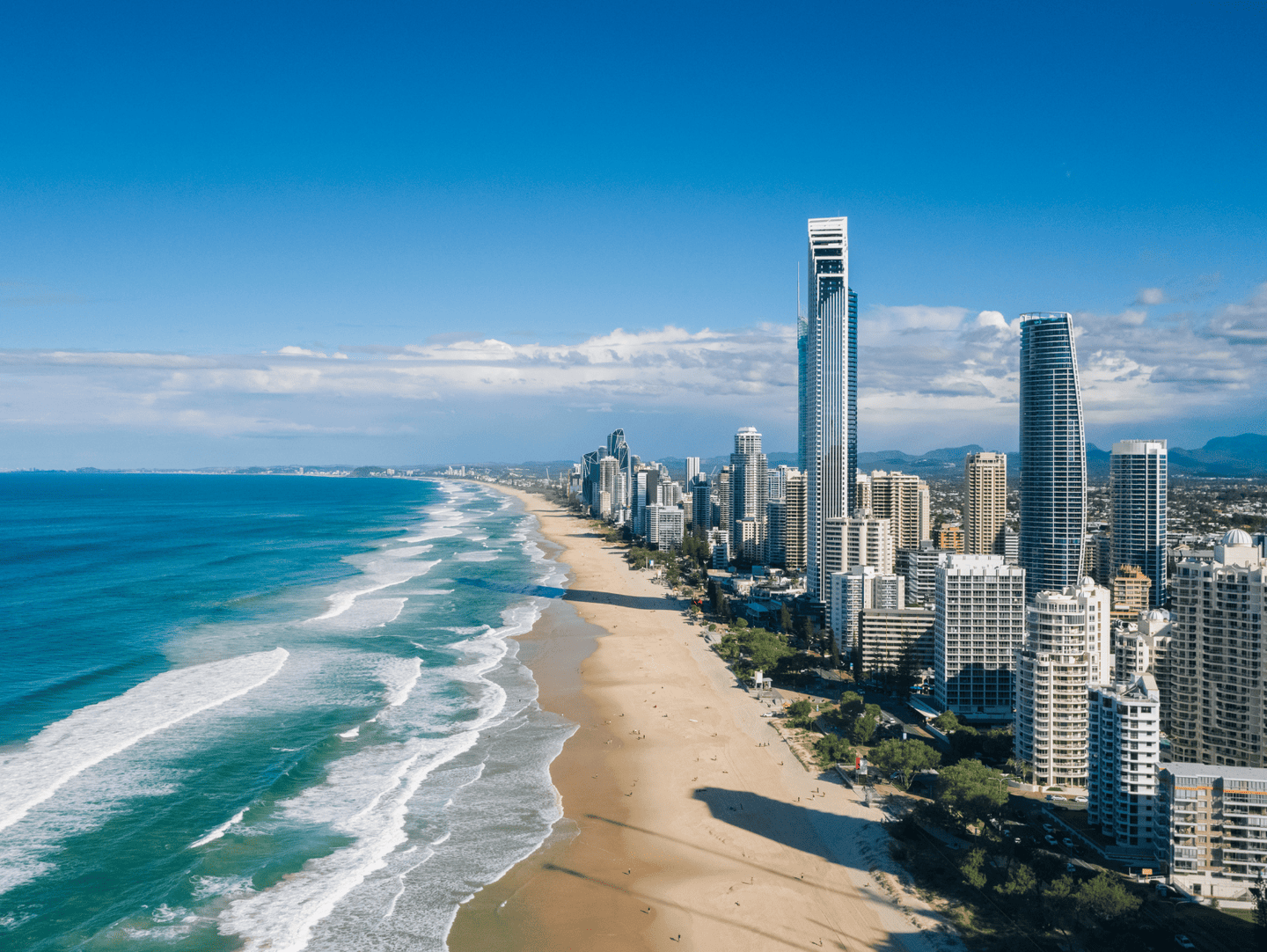
The coastal line runs south from Brisbane through the far north coast of New South Wales, down through Coffs Harbour, Port Macquarie, Newcastle and Sydney, then through the south coast and Gippsland before turning west along the Victorian coast. It is a road with towns on it, and the sea is usually within sight or a short detour.
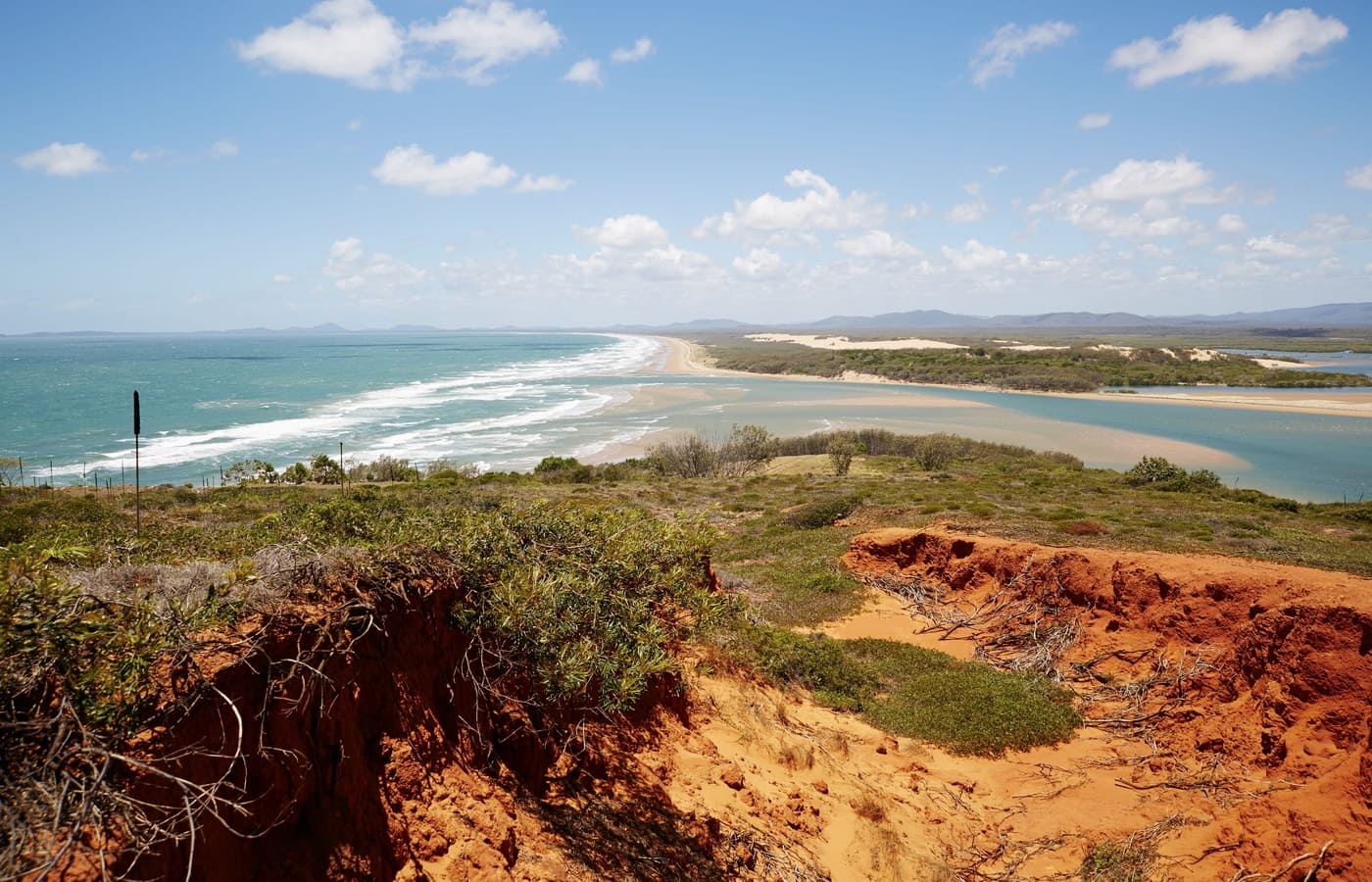
The inland line leaves the coast west of Brisbane and runs south through the tablelands and western slopes, down the Newell Highway, then across the Murray into Victoria on a line that passes well west of Sydney and Canberra. It is a road of long straight sections, grain silos, and towns spaced for farming rather than tourists.
| Question | Princes Highway coast | Newell and Olympic Way inland |
|---|---|---|
| How long is a typical day? | Short, and you can make it shorter without losing anything | Long and steady, and shortening one day pushes the next |
| How often can you stop? | Constantly. Towns, beaches, lookouts, services. | At intervals. Fuel and food are planned rather than assumed. |
| What is the driving like? | Curving, undulating, busy in stretches, frequently slow | Straight, open, monotonous in a way that requires managing fatigue |
| What do you need to be good at? | Deciding when to stop, and resisting the urge to stop at everything | Sitting still, and keeping the day's distance honest rather than optimistic |
| What do you give up? | Any sense of distance covered, and the chance to see inland Australia | The ocean entirely, and the option to change plans at lunchtime |
The fork, by what it asks of you rather than by what it shows you
That table is the whole argument, and it is not about scenery. Scenery is the easy part to describe and the least useful to plan around, because both lines are worth driving. What separates them is the texture of the days.
Who the coast suits
The coastal line suits anyone whose trip is the stopping rather than the driving. If you want to swim, walk a headland before breakfast, eat somewhere that is not a roadhouse, and be in a different small town most evenings, this is it. It forgives a late start and a change of mind.
It also suits a first long drive in Australia, because the consequences of a mistake are small. Miss a turn and there is another. Arrive somewhere full and there is a town twenty minutes on.
What it does not suit is anyone trying to cover ground. The road is slow in a way that is easy to underestimate: it bends through every headland, passes through every town at a lower limit, and fills with traffic in holiday periods. A day planned at highway average here ends in the dark.
Who the inland suits
The inland line suits anyone who wants the driving itself to be the trip. It is a road for people who like a long day with a destination at the end of it, who find open country interesting rather than empty, and who do not need the sea to have had a good time.
It also suits anyone travelling in a peak holiday period when the coast is crowded. The inland road is not empty, but it is not a queue, and the towns along it are working towns rather than resort towns.
What it demands is discipline about fatigue. Long straight roads at constant speed are the conditions that make tiredness hard to notice. Stop before you need to, share the driving if there are two of you, and treat a scheduled break as part of the day rather than a failure to make progress.
- Fix the day's end point before you start, and keep it even if you are making better time than expected.
- Plan fuel around the gaps rather than around the towns, because the spacing is set for locals.
- Take a real break every couple of hours, out of the vehicle, not a pause in the driver's seat.
- Watch for heavy vehicles and long overtaking lanes, and do not treat either as an invitation.
- Have something to listen to that is not designed to keep you awake, because that is not how fatigue works.
Loud music and open windows are folk remedies. What helps is stopping, so plan the day so that stopping is possible.
The Sydney question
Sydney is where the two lines are furthest apart in character. The coastal line goes through it, which means either stopping in a very large city with a camper, or a bypass that skips the city and takes some of the coast's best country with it.
The inland line does not go near Sydney at all. It passes west, through country that has nothing to do with the city, and arrives in Victoria without ever having been in New South Wales' coastal strip. For anyone who has already seen Sydney, or who does not want to drive a camper through it, that is a substantial argument.
The honest way to decide is to ask whether Sydney is a destination or an obstacle. If a destination, the coast is the only line that serves it. If an obstacle, the inland line removes it completely.
The third option, which is really a hybrid
There is a version that uses both lines, and it is often what people actually want. Run the coast to the far north of New South Wales, cut inland across the tablelands to join the Newell, go south, and rejoin the coast in Victoria. It gives you the best of the coastal strip without Sydney.
The cost is a range crossing on a road you have to choose deliberately, and a day that is neither one thing nor the other. Done well it is the strongest version of the trip; done carelessly it is two half-plans with a long ambiguous day in the middle. Treat the crossing as its own day.
Vehicle, borders and the boring practicalities
A two-person camper is fine on both lines, and the choice between them is not a vehicle question. What differs is how the vehicle is used: on the coast it is somewhere to sleep between stops, inland it is somewhere to sleep at the end of a long day. The second makes storage discipline matter more, because you unpack tired rather than mid-afternoon.
Crossing Queensland, New South Wales and Victoria brings interstate differences in road rules, worth reading before you go rather than discovering at a border town. Speed limits by road type, school zone times and phone rules are set by each state rather than nationally. Check each transport authority's own pages for the rules where you will be driving.
The drive has two natural ends and they are not interchangeable. Brisbane has an easy exit north and south; Melbourne is a bigger city with a longer approach. Anyone starting in Brisbane should look at the operator's own page for campervan hire in Brisbane before booking a pickup time, because the time you collect the vehicle decides whether day one is a driving day or a half day on the coast.
At the other end, the Melbourne return is what most people under-plan. The approach is long, the traffic is real, and a morning drop-off means spending the last night outside the city. The depot arrangements for campervan depots in Melbourne are worth reading at the planning stage for exactly that reason, since they determine how the final two days are shaped.
How to actually decide
Four questions. Is Sydney part of the trip or an obstacle? Do you want the sea every day or open country? Would you rather drive six short days or four long ones? Is your window inside a school holiday? The answers point one way or the other, and if they conflict, the Sydney question decides.
What does not help is trying to see both. A drive that attempts the coast and the inland in one run spends its whole length in transit between two things it never settles into. Pick a line, drive it properly, and leave the other for next time.
Questions people ask
- Is the coastal or inland route better from Brisbane to Melbourne?
- They do different jobs. The Princes Highway coast is for stopping often, with towns and ocean at short intervals; it is slow in hours rather than long in distance, and it forgives a change of plan. The Newell and Olympic Way inland is for long steady days through open country, and it demands discipline about fatigue. Pick on the texture of the days you want, not on scenery.
- Does the inland route go through Sydney?
- No. The inland line passes well west of Sydney, which is one of its main attractions for anyone who does not want to drive a camper through the city. The coastal line goes through Sydney, which means either stopping in the middle of it or taking a bypass that skips some of the coast's best country. Whether Sydney is a destination or an obstacle is the single most useful question in the decision.
- How many days should I allow for Brisbane to Melbourne?
- Enough that a day on the coast can be short without the trip falling behind, and that a day inland can be long without becoming unsafe. That usually means more days on the coast than a distance calculation suggests, because the coastal road runs slow through towns and bends. Fix the number of nights first and let the daily distance follow, rather than the other way round.
- Can I combine both routes?
- Yes, and it is often what people actually want: run the far north coast of New South Wales, cross the tablelands to join the Newell, continue south inland, and rejoin the coast in Victoria. It avoids Sydney and keeps the best of the coastal strip. Treat the range crossing as its own day rather than as a link between two others, or the hybrid becomes two half-plans in a row.
- Do road rules change between Queensland, New South Wales and Victoria?
- Yes. Speed limits by road type, school zone times and phone rules are set by each state rather than nationally, and they do not always match. Check each state transport authority's own pages for the rules where you will be driving, and read them before you travel rather than at a border town. Interstate differences are small but they are real.
Where these facts come from
- Wicked Campers — campervan hire in Brisbane
- Wicked Campers — campervan hire in Melbourne
- Transport for NSW — road rules and safety
- Queensland Department of Transport and Main Roads
- VicRoads — road rules and road safety
Details like booking rules, fees and closures change. Check the authority above before you rely on any of it for a specific date.