Wilsons Promontory: Camping at Tidal River and What a Vehicle Can Do
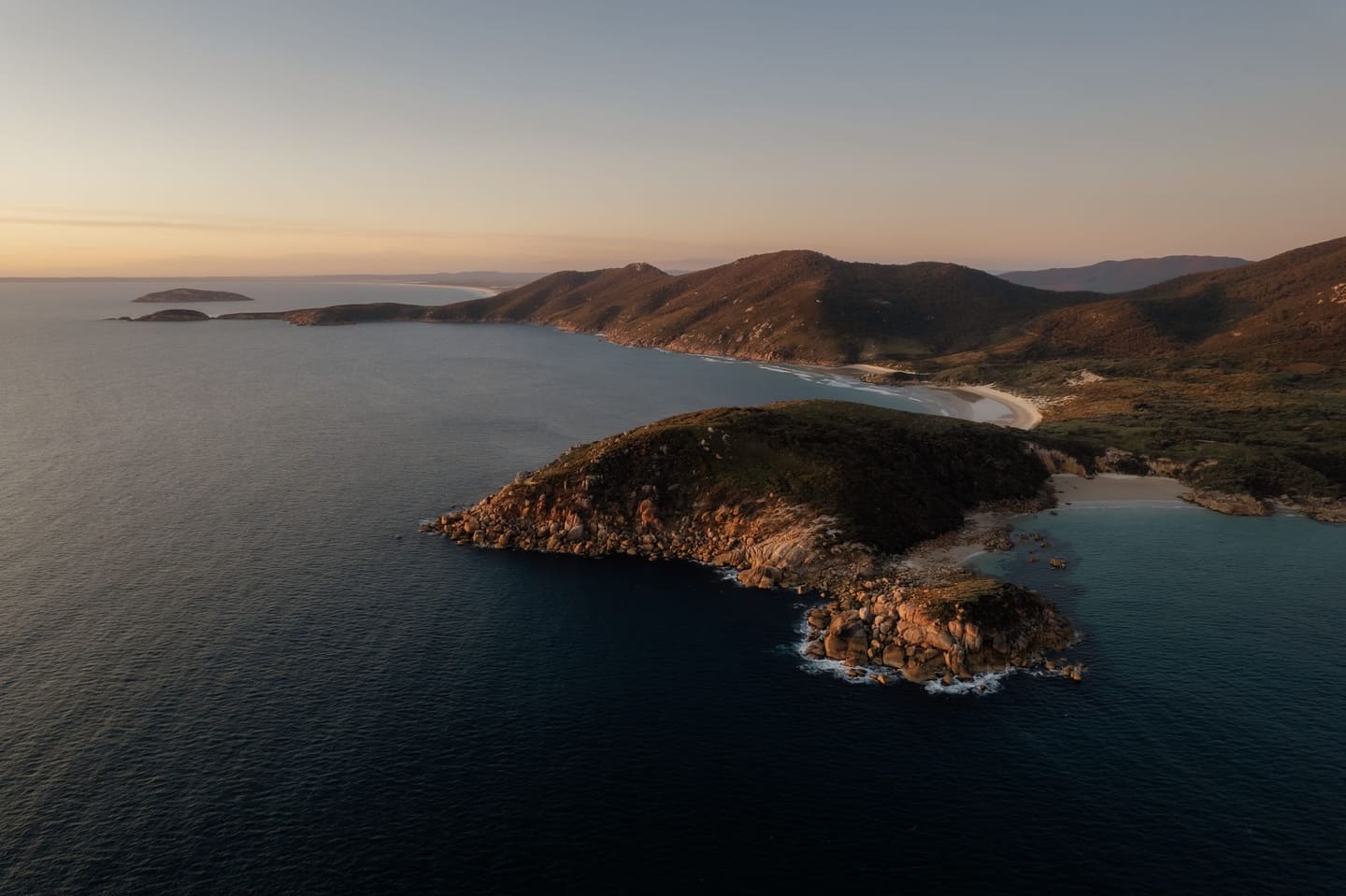
Wilsons Promontory is 50,500 hectares of granite, forest and coast at the southern tip of mainland Australia, about 157 kilometres south-east of Melbourne, and it is the southernmost national park on the mainland. Almost everything written about it is about the scenery. What decides whether you actually sleep there is a campground with 482 sites, twenty of them powered, and a booking system that fills in peak season.
The drive is the easy part
From Melbourne the park is a straightforward run south-east through farmland, and the last stretch into the park is where the country changes: the road narrows, the scrub closes in, and the granite starts to show through the vegetation. About 157 kilometres, no long gaps between services, and the drive is the part of the trip that needs no planning.
That is worth saying at the start because it inverts the usual order of planning. On most Victorian trips you work out the driving first and the sleeping second. Here the sleeping is the whole problem, and the driving is a detail you settle the week before.
It is also why the park is often skipped. It has no landmark that appears on a postcard and no town at the gate. What it has is a single campground at the end of a road, a lot of walking country behind it, and a fixed capacity.
One campground, and what 482 sites means
Tidal River is the campground, and it is effectively the park's accommodation: 482 sites, of which 20 are powered. Those two numbers together tell you more about a stay here than any description of the scenery. It is a large campground by national park standards and a very small one by the standards of the number of people who want to be in it on a January weekend.
The twenty powered sites are the part to think about before you book anything. If your vehicle needs power, the powered allocation is a tiny fraction of the total, and it is contested by caravans and motorhomes as well as by campervans. If your vehicle does not need power, the unpowered sites are the larger pool and the sensible target — and a small camper that runs its own lights and fridge has no reason to compete for a powered bay.
What a vehicle can and cannot do inside the park
The honest answer to this is that it depends on the road and on the current advice, and the only reliable source is Parks Victoria's own access information for the park. What can be said with confidence is the shape of the question, which is different from the shape of the question at most Victorian destinations.
Tidal River is the end of the vehicle road. Beyond it, the park is walking country: tracks, beaches reached on foot, and campsites for people carrying their accommodation rather than driving it. That is not a restriction invented to inconvenience drivers; a park this size with a road through it would not be this park.
So the practical planning is about the last few kilometres rather than the middle of the park. Vehicle size, height and turning circle matter at a campground laid out for tents and small vans as much as for large rigs, and the twenty powered bays are not generous. If you are hiring, ask the operator what the vehicle's dimensions are and compare them against what the campsite listing says about the site you are booking, rather than assuming a bay labelled powered will take anything with a plug.
- Confirm with Parks Victoria which roads inside the park are open to vehicles and which are walking access only.
- Confirm the maximum vehicle length and height for the campground, and for the specific site type you are booking.
- Ask whether the site is a drive-in bay, a pull-in beside a road, or a walk-in pitch that requires carrying gear.
- Check whether any part of the park is closed for management, fire risk or rehabilitation at the time you plan to travel.
None of that is answerable from a photograph, and all of it changes. The check takes minutes; skipping it can cost a night.
Booking, in the right order
Peak demand at Tidal River is not a rumour. Pre-booking is essential for the summer school holidays, Easter and most long weekends, and Parks Victoria operates a published release schedule for peak periods rather than a first-come queue. The order below is the one that avoids the two common failures: booking a site before checking the vehicle, and checking the vehicle after the sites have gone.
- Decide your dates from the release calendar, not from your own convenience. Peak windows are released to a schedule and the useful sites go early in each release.
- Confirm the vehicle's dimensions and whether it needs power, before you look at availability. This decides which site type you are even eligible for.
- Read the current Parks Victoria listing for Tidal River itself, including the site type, the access arrangement and any current closures. Do not work from a guide, and do not work from a booking confirmation screenshot someone sent you.
- Book the nights you cannot lose first. A two-night stay in a peak window is a different booking problem from a five-night one, and shorter stays are easier to place.
- Record the booking details somewhere you can reach without signal, because the last part of the drive has none worth relying on.
- Check again in the week before you travel for changed arrangements, closures or access advice.
The sixth item is not box-ticking. Parks Victoria changed booking arrangements for some campsites from 1 July 2026, so material published before that date describes a system that no longer exists in the same form. Check anything you read about Victorian park camping against the agency's own page for the specific campground, this article included.
Walks from the campground
The reason to sleep at Tidal River rather than somewhere outside the park is that the walking starts at the door. Tracks leave the campground in several directions: along the river and the estuary, out to the ocean beaches over the dunes, and up onto the granite for the views back across the coast. The park's own walking notes give lengths, grades and closures, and they are the version to trust.
What matters for planning is the shape of a day rather than a list of destinations. A morning walk and an afternoon walk, with the hot middle of the day spent at the campground or in the water, is how most people end up using the place, and it is a better use of a short stay than one ambitious outing that finishes in the heat of the afternoon. Coastal weather here changes quickly and the exposed sections have no shade.
Footwear catches people out. The tracks mix sand, rock and tree roots, and a walk that begins on a boardwalk can end on granite slabs above the water. Shoes that grip and can get wet cover more of this park than anything designed for a footpath.
If Tidal River is full
It will be, on the dates most people want. The useful response is not to look for a back way in — there is not one — but to change the question. Either move the dates, or treat the park as a day visit from a base outside it, or look at whether the park's walk-in camping suits you, which requires carrying everything and gives you a completely different trip.
Walk-in camping is the option most people dismiss too quickly. It removes the campground problem entirely, it puts you in parts of the park that day visitors never see, and it asks for a proper pack, water capacity and the willingness to leave the vehicle behind. It is not a fallback for people who failed to book; it is a different holiday that happens to solve the same problem.
What it is not is a loophole. Walk-in sites are managed and booked like any other, they have their own capacity, and they close. Confirm arrangements with Parks Victoria before planning a night on foot.
Getting there, and the last town
The approach runs through Gippsland farmland, and the towns on the way are the last places to buy anything before the park. The campground is not a shop, the park has no fuel, and arriving at five in the afternoon with nothing for dinner is the most common first-night mistake at Tidal River.
Anyone collecting a vehicle in the city should check the operator's own depot page for campervan hire in Melbourne before pickup day, since the depot's opening hours and return arrangements set the shape of both the first and last morning of a short park trip. It is also where to settle the vehicle-dimension question that determines which campsite you should be booking.
The return leg is a plain drive back through the same farmland and there is no clever alternative route. Make the last night in the park rather than an hour up the road, and the leavetaking is a walk before breakfast rather than a packing exercise in the dark.
Questions people ask
- Do you have to book camping at Wilsons Promontory?
- Pre-booking is essential for Tidal River in the summer school holidays, Easter and most long weekends, and Parks Victoria runs a published release schedule for peak periods rather than a first-come queue. Check the current listing for the campground before you rely on any dates you have read elsewhere: arrangements for some Victorian campsites changed from 1 July 2026, so older guidance may describe a system that no longer applies.
- How many campsites are there at Tidal River?
- 482 sites, of which 20 are powered. The ratio is the useful part: the powered allocation is small and contested by caravans and motorhomes as well as campervans, so a vehicle that runs its own power has no reason to compete for it. Confirm site types and vehicle limits with Parks Victoria when you book rather than after you arrive.
- Can you drive around inside Wilsons Promontory?
- Tidal River is the end of the vehicle road. Beyond it the park is walking country, with tracks and walk-in campsites rather than drives. Which roads are open to vehicles, and what size is permitted, is published by Parks Victoria and changes with management and fire risk, so check the park's current access information rather than assuming a road shown on a map is open to you.
- How far is Wilsons Promontory from Melbourne?
- About 157 kilometres south-east of Melbourne, which is a straightforward drive through farmland with no long gaps between services. The park is 50,500 hectares and is the southernmost national park on mainland Australia. The last stretch inside the park narrows and slows, so allow for that rather than for the highway average.
- What if Tidal River campground is fully booked?
- Change the question rather than hunting for a back way in. Move your dates, treat the park as a day visit from a base outside it, or look at the park's walk-in camping, which is booked and managed like any other site and requires carrying your accommodation. Confirm capacity, arrangements and closures with Parks Victoria before planning a night on foot.
Where these facts come from
- Parks Victoria — Wilsons Promontory National Park
- Parks Victoria — Tidal River campground
- Parks Victoria — camping in Victoria
- Parks Victoria — how to book camping online
- Wicked Campers — campervan hire in Melbourne
Details like booking rules, fees and closures change. Check the authority above before you rely on any of it for a specific date.