The Gibb River Road: Deciding Before You Commit
The Gibb River Road is the kind of road that gets recommended before it gets explained. It is 647 kilometres, mostly unsealed, and Main Roads Western Australia describes it as a road that can turn from the trip of a lifetime into a nightmare if you are not prepared. That sentence is not marketing. It is the whole decision, stated by the authority that maintains the road.
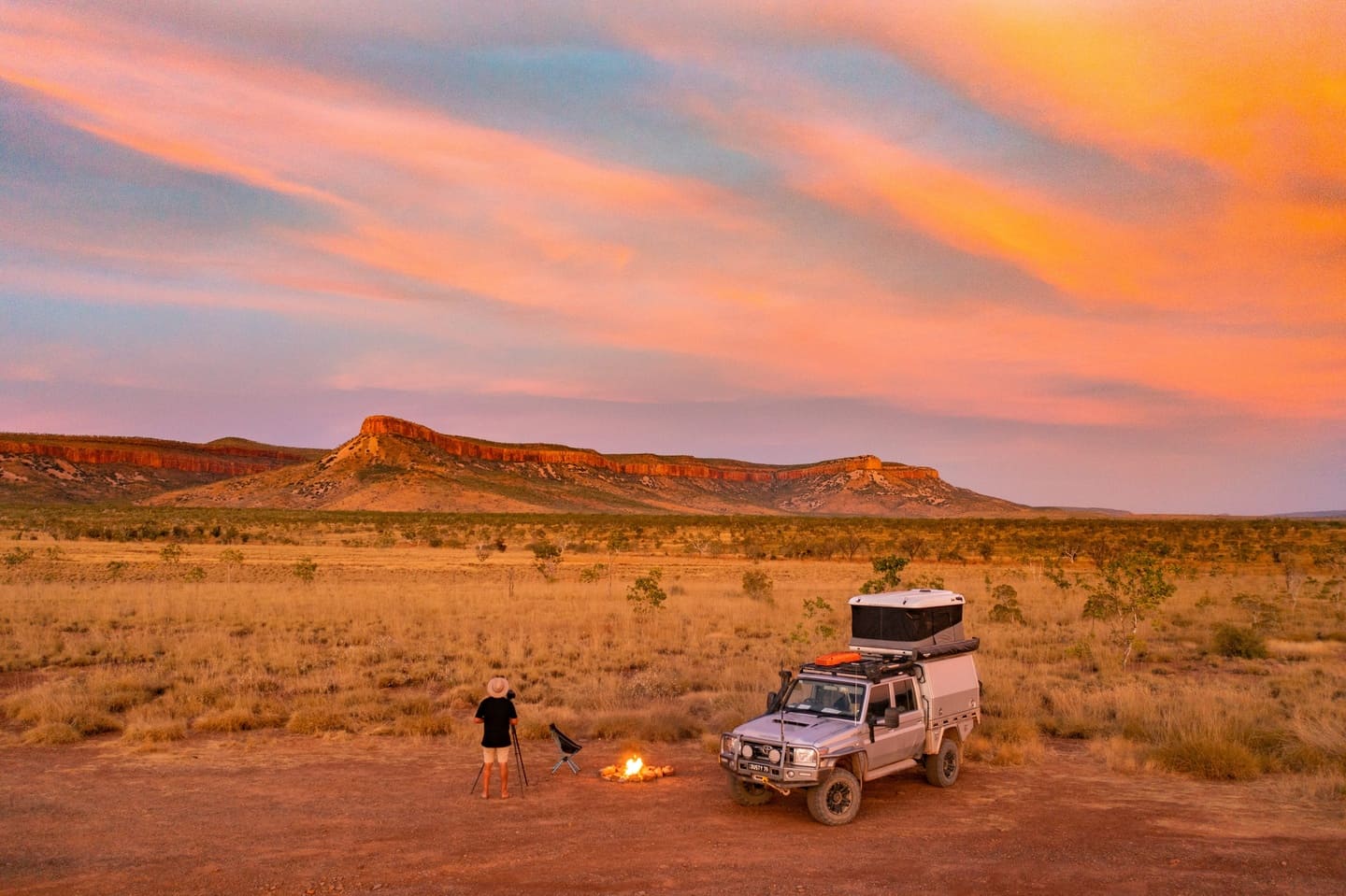
The question is not whether the road is worth it
It is. That is settled, and it is not what this article is for. What costs people money, days and occasionally a vehicle is a different question: does this road belong in the trip you have booked, with the vehicle you have booked, in the month you are travelling? Three answers, and any one can be no.
No list of gorges here, and no day plan. Both are easy to find. This is the decision, and the consequences of saying yes.
First test: what the road actually is
Main Roads Western Australia puts the road at 647 kilometres, mainly unsealed. The unsealed section runs between the Lennard River and the Pentecost River — roughly 470 kilometres — with long stretches of heavy corrugation, loose gravel, potholes and rock, and a few sealed sections giving short relief.
Two maintenance facts matter more than the distance. The unsealed sections are graded three to four times a year, and a full grade can take two months. So one end can be freshly worked while the other has deteriorated, and what a driver coming the other way tells you may describe a road you will not meet for two days.
The consequence is not a number of days but the absence of a rate of progress. A section that took four hours last week can take six this week, and a plan built on the good week has no room for the other one.
Second test: the vehicle you have against the vehicle the road wants
Main Roads is unusually direct: it recommends a larger 4WD in high range with high clearance, and states that caravans, motorhomes and some camper trailers are not recommended on unsealed roads.
That is the authority saying a large share of the vehicles people drive to Broome are the wrong tool for this one — a comment on clearance, weight and tyre construction, not on quality.
The second test has two halves. Is the vehicle the class the road authority recommends? And does the hire agreement permit this road, with cover on unsealed surfaces? A yes to the first and a no to the second is a no — settled with the operator before the route is built, not at a junction with no signal.
Third test: what it does to the rest of the itinerary
This is the test people skip, and it decides whether the trip was good. Committing to the Gibb subtracts options from everything either side of it.
It sets the pace of the whole trip
On a sealed highway, distance is the planning unit. Here it is hours, set by surface, vehicle and stops. A route reading as three comfortable days can be five hard ones.
It sets the shape of the days
The driving has to happen in daylight, which here is not a preference. Wildlife at dawn and dusk is a standard hazard and Main Roads names it. Add corrugations and floodways and the usable day is shorter than the daylight, so nights go up while things done per day go down.
It sets the turnarounds
A road with limited side access has limited escape routes. If something goes wrong halfway, recovery is forward or back, and both may be far. Not a reason to avoid it, but a reason to carry a spare day you never intend to use.
The turn-back rules
Decide these in the calm, before you leave.
- Water of unknown depth is a stop, not a calculation. Main Roads advises not driving through water of unknown depth, and warns that the Pentecost River is the major crossing on the road and that levels can rise very quickly.
- If the road status has changed since you last checked, stop and check again. Main Roads maintains status boards at both ends of the road, near Derby and near Kununurra, and its travel map carries current restrictions. Confirm status with Main Roads WA before and during the drive.
- A side road is a separate decision. Main Roads states that side roads are managed by other agencies — the Shire of Derby/West Kimberley, the Shire of Wyndham/East Kimberley and the parks service for Purnululu — so the main road being open says nothing about the track to a campground. Confirm each with its manager.
- One vehicle problem is a turn-back unless it is genuinely fixable on the spot. A tyre change is routine here and Main Roads says as much; a second failure in the same day is a message.
- If you are behind the plan by more than a day and the surface is deteriorating, the plan is what changes, not the speed.
- If anyone in the vehicle is unwell, or the heat has taken more out of the day than it should have, that is reason enough.
Season: a gate you do not open
Main Roads states the road is often closed during the wet season, generally December to April, as river crossings become impassable and sections are damaged. It is typically open May to November, reopening after the wet only when safe following flood repairs.
Two things follow. The opening date is a decision made after inspection, not a calendar event, and it moves. And check whether the side roads are open, because a road open in the middle can still lead nowhere.
Main Roads notes that early in the dry season the rivers may still be flowing with more water in the gorges, while later it heats up and hiking gets harder. That trade is the one seasonal judgement worth making yourself.
The decision, written as a sentence
If the vehicle is the class the road authority recommends, the hire agreement permits this road, you have more days than the map suggests, and you are travelling in the dry season with a spare day you do not need — take it, and take it slowly. If any of those is false, the road belongs in a later trip.
Where the vehicle comes from
The Gibb runs between Derby and Wyndham, and Broome is the practical base for most approaches from the west coast. If you are hiring, campervan hire in Broome is the depot page to start from, and the question to put to it is specific: is this vehicle permitted on the Gibb River Road, and on which side roads, under the conditions of hire. That answer is the operator's to give, on its own site.
If the answer points at a different class of vehicle, that is a separate conversation with a separate operator: the 4WD hire operation and 4WD hire in Australia are the operator's own sites, not this one.
None of those pages, and nothing on this one, tells you the road is open. That is Main Roads, the two shires and the parks service, this week rather than this season.
Questions people ask
- Do I need a 4WD for the Gibb River Road?
- Main Roads recommends a larger, high-clearance 4WD in high range, and states that caravans, motorhomes and some camper trailers are not recommended on unsealed roads. If you are hiring, the rental conditions must also permit the road, and the stricter test applies. Check both before planning around it.
- When is the Gibb River Road open?
- Typically May to November, with the road often closed in the wet season from December to April as crossings become impassable and sections are damaged. It reopens only when Main Roads judges it safe after flood repairs, so the date moves. Check current status rather than a season summary.
- How long does the Gibb River Road take?
- No honest fixed answer exists. Progress depends on surface, vehicle and stops, and Main Roads notes the road is graded three to four times a year with each full grade taking up to two months. Plan in days with slack, and check the side roads before setting the number.
- Can I drive the Gibb River Road in a two-person campervan?
- Only if the operator permits it and the vehicle meets what the road authority recommends — two separate tests. Main Roads recommends a larger high-clearance 4WD and advises against caravans, motorhomes and some camper trailers on unsealed roads. Ask the depot about this specific road rather than relying on a general claim.
Where these facts come from
- Main Roads Western Australia — Gibb River Road
- Main Roads Western Australia — travel map and road conditions
- Shire of Derby / West Kimberley
- Shire of Wyndham / East Kimberley
- Parks and Wildlife Service WA — camping and park entry
Details like booking rules, fees and closures change. Check the authority above before you rely on any of it for a specific date.