Campervan or Car and Hotels in Australia? The Trade You Are Actually Making
This is not a comparison between two kinds of hire vehicle. It is a comparison between two entirely different ways of spending a night, and the vehicle is only the part of it you can see. One option gives you a bed that moves with you and a kitchen in the back. The other gives you a room with a door, a shower and a town outside it. Almost every argument about which is better is really an argument about which kind of evening you want, and about how much uncertainty you can tolerate.
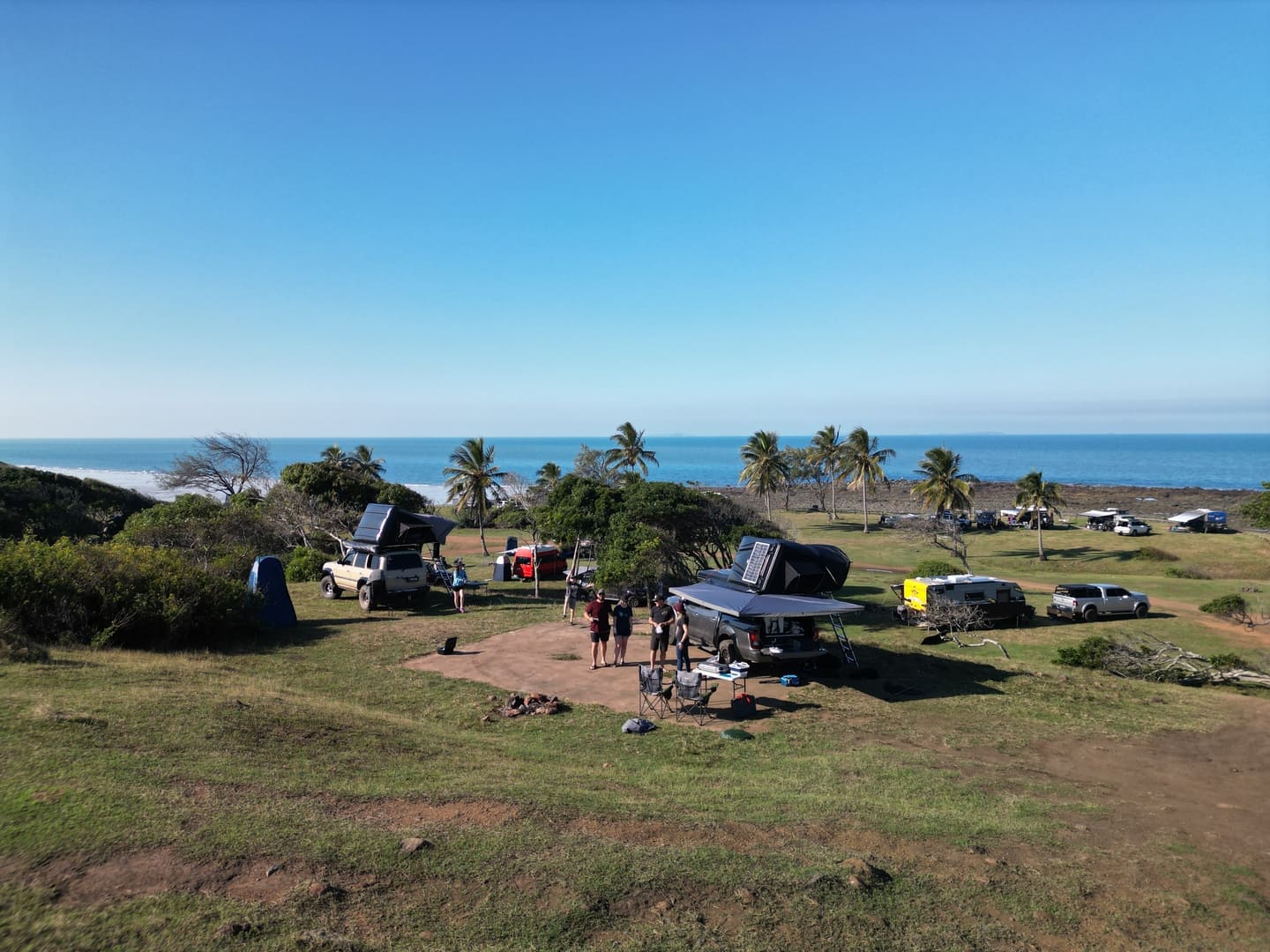
The comparison people think they are making
Most articles on this subject compare a campervan with a motorhome, which is a question about which class of hire vehicle suits you. That is a useful question and a different one. This page compares hiring something you can sleep in against hiring a car and paying for a room every night — two complete travel systems with different costs, different freedoms and different failure modes.
The distinction matters because the trade-offs do not overlap. Choosing between two campervan classes is about space, height, licence class and whether you can stand up. Choosing between a campervan and a car with hotels is about whether your trip has a fixed shape or a movable one.
What a campervan actually buys you
A campervan buys one thing above all: the day can end where it ends. You do not have to reach a specific town by a specific hour, because the bed is behind you. That single property changes the character of a trip more than any other.
With a room booked, every day has a destination and therefore a deadline. The walk you would have taken at four o'clock gets shortened because the town is another ninety minutes away. With the van, the walk happens, and the night happens where the walk finished. Over a fortnight that compounds into a completely different trip — not a cheaper one, a less interrupted one.
It also buys you a kitchen and a fridge, which is the most consequential part of the arrangement. Self-catering is not a minor saving on a long trip; it changes when you eat and where you stop. A van with a stove means dinner happens at the campsite at seven, not in a town at eight-thirty after a search.
What it costs you, beyond the hire
The van's freedom has a boundary that catches first-timers: you may only sleep where sleeping is permitted. A room is unambiguously yours; a campervan is a vehicle with a bed, and whether you may use the bed at a given place is decided by whoever manages that land — a parks agency, a council, a pastoral lease holder or a campground.
That converts a freedom into a nightly administrative task. In practice it is a small one, because Australia has a great deal of legal camping, from national park campgrounds to council-run sites to private parks with power and showers. But it is a decision every afternoon rather than a key handed over at a desk, and travellers who dislike that kind of decision find the van tiring rather than liberating.
The other cost is weather. A room absorbs a storm. A van does not, and a night of heavy rain in a small vehicle is a genuinely uncomfortable experience rather than a character-building one. In the tropical north's wet season, or on a cold southern coast in winter, this is not a hypothetical. There are nights where the correct answer is a room, and a sensible van trip plans for a few of them rather than pretending otherwise.
The decision, laid out
| Consideration | Campervan | Car and hotels |
|---|---|---|
| Where the day ends | Wherever you are, provided you may legally stop there | At a town you chose weeks ago, by a check-in time |
| Booking burden | A few anchor nights; the rest decided on the road | Every night needs an address, and peak season needs it early |
| Cooking | Built in, if the class includes a stove and fridge | Depends entirely on the room; usually means buying every meal |
| Showering | Campsite facilities, or a paid shower, or a swim | In the room, every night, without thinking about it |
| Bad weather | Uncomfortable; needs an escape plan in the wet or cold seasons | Largely irrelevant once the door is shut |
| Cities | A liability: parking, height limits, and nowhere legal to sleep | The natural fit. Park once, walk everywhere |
| Packing | Unpack once and live out of cupboards | Repack every morning, carry bags up stairs every night |
| One-way travel | Possible between depots, subject to a fee and availability | Usually straightforward; a car can be returned elsewhere for a price |
| Best for | Coasts, long drives, national parks, trips whose shape is not fixed | Cities, short trips, wet or cold seasons, travellers who want a door |
The two systems, line by line
The one-way question, which decides more trips than people expect
Australia tempts you into one-way trips, because the distances are long and nobody wants to drive back. A one-way hire moves a vehicle from one depot to another, and whether that is possible, and what it costs, depends on the pair of cities and the season. Some combinations are routinely available because the operator wants the vehicle moved. Others are expensive or impossible because the vehicle would be stranded.
This is not a reason to avoid one-way travel, and it is not a cost you can estimate from here. It is a question with a specific answer for a specific pair of cities on specific dates, worth asking before you build an itinerary around it. Use the Australian pickup locations page to explore starting points, then check whether your preferred one-way route is available for your dates.
Which trip shapes genuinely suit each
The useful way to decide is not to compare the two systems in the abstract, but to describe your trip and see which one it resembles. Four shapes cover most first visits.
- A coastal drive of a week or more, with national parks and small towns along the way. This is the van's home ground. The days are shaped by what you find, the nights are cheap and legal in established campgrounds, and the vehicle is doing exactly the job it was designed for.
- A city-based trip with two or three days out. A car and hotels wins clearly. You do not want to be finding a legal place to sleep in a capital city, and a vehicle you cannot park is a cost rather than an asset.
- A long inland or remote crossing. The van works if it is the right class and the roads are permitted, and this is the case where the hotel alternative breaks down entirely, because there are long stretches with no rooms to book.
- A wet-season or winter trip in the south or the tropics. Hotels or a hybrid. Assume several nights indoors and plan for them rather than treating them as failure.
A hybrid is legitimate and underrated: a van for the coastal or inland middle of the trip, and two or three booked nights at each end around the flights. The van does the part it is good at, the rooms do the part they are good at, and nobody spends a night in an airport car park because they were being purist about it.
The costs people forget to compare
Three asymmetries are usually missing from the comparison. The first is that a hotel trip has a fixed nightly floor: every night costs something, including the nights you arrive late and leave early. A legal camp can be very cheap and some are free, but there are nights where you pay for a campsite that is not much cheaper than a budget room and considerably less comfortable.
The second is parking. In cities, a vehicle costs money to leave somewhere and may not fit under anything. That cost is real, recurring, and invisible in any headline rate, and it is the strongest argument for not taking a vehicle into a city at all.
The third is time. Setting up and packing down a camper takes a certain number of minutes twice a day, every day, whether you are tired or not. A hotel room takes none of those minutes and adds a different set instead: finding the place, parking, carrying bags, checking in. Which one annoys you more is a genuine part of the decision.
What to confirm before either booking
For the van, four things are worth checking in writing rather than assuming: what the class actually includes — stove, fridge, water capacity, bedding — whether the roads you intend to use are permitted under the agreement, whether a one-way movement between your two cities is available, and what the operator's conditions say about where the vehicle may be left overnight. The last one is the one people discover too late.
For the car, the questions are the same shape: what the insurance actually covers, what the excess is, whether there is a distance limit, and what a one-way return costs between your specific pair of cities. Those conditions are set per operator and per depot, and the current versions live on the operator's own pages rather than in any guide, including this one.
Readers coming from overseas who have not settled on a country-level plan will find the operator's Australian campervan options written for an international audience, and the individual vehicle classes and what each one includes on a separate page. Read the inclusion list against your own trip: a class without a fridge changes what you eat.
The answer, stated plainly
The campervan is better for trips whose shape is not yet fixed, which in Australia usually means coastlines, national parks and long drives between small towns. A car and hotels is better for cities, short trips, cold or wet seasons, and anyone who wants a door between themselves and the weather. Neither is cheaper in the abstract; they are cheaper for different itineraries.
What makes the decision hard is not the arithmetic. It is that the two options promise different holidays, and most people want both. The honest resolution is to choose the one that matches the majority of your nights.
Questions people ask
- Is a campervan cheaper than a car and hotels in Australia?
- It can be, and the saving does not come from the hire rate. It comes from the nights you do not rent and the meals you do not buy, which means it only materialises if you actually sleep in the van and cook in it. A van used as a car with a mattress in it is more expensive than a car and a room.
- Can you sleep anywhere in a campervan in Australia?
- No. Overnight sleeping in a vehicle is regulated locally, and the rule differs between a national park, a council area, a pastoral lease and a private campground. Some places provide designated overnight areas, some prohibit it outright, and signage is often the only notice. Confirm the specific spot with the land manager before the evening rather than after arrival.
- Is a campervan practical in Australian cities?
- Not really. Parking is limited and often paid, height restrictions apply to car parks, and there is generally nowhere legal to spend the night. The workable pattern is to collect the van after your city days, or drop it before them, rather than treating a city as a place to camp.
- What is a one-way campervan hire and does it cost more?
- It is a hire collected in one city and returned in another, which moves a vehicle between depots. Availability and any associated charge depend on the pair of cities and the season, because the operator is balancing its fleet. Ask for your specific combination rather than assuming a one-way trip is either free or impossible.
- What happens if the weather turns bad in a campervan?
- You get wet, and a night of heavy rain in a small vehicle is genuinely uncomfortable. The practical answer is to plan a paid-night allowance for wet or cold seasons and treat a room as part of the trip rather than a failure. In the tropical north's wet season this is not an edge case; roads and parks close, and people move indoors.
Where these facts come from
- Wicked Campers — campervan hire locations
- Wicked Campers — international Australian pages
- Parks Australia — camping in Commonwealth parks
- Bureau of Meteorology — climate outlooks
Details like booking rules, fees and closures change. Check the authority above before you rely on any of it for a specific date.