National Park Entry Fees in Australia Are Not National: How the System Works
There is no such thing as an Australian national park entry fee. There are eight sets of them, set by eight jurisdictions, and within each one the rules vary between parks. A pass bought in one state is generally worth nothing in the next, a pass that covers entry usually does not cover camping, and some of the country's most famous landscapes charge nothing at all. This is the structure — what the categories are, what each one does and does not include, and where the current position is published.
The misunderstanding that costs people a day
Overseas visitors arrive with a reasonable assumption: that a national park system is a national system, and that a pass bought at the first park will work at the next one. In Australia it will not, and the reason is constitutional rather than commercial. Land and its management sit with the states, so each state and territory legislated its own parks system, its own agency and its own charging model.
The practical consequence is that a road trip crossing three states is dealing with three separate regimes, and you have to check three times. That sounds like bureaucracy and it is, but it also produces the good news: because the models differ, a great many parks charge nothing, and the places that do charge tend to be the ones with built infrastructure — a visitor centre, a maintained road, a developed campground, a staffed entrance.
The categories you will actually meet
Charging models vary, but almost everything you encounter falls into one of six categories. Knowing which one applies to the park you are driving to is most of the work.
| Category | What it is | What it normally covers |
|---|---|---|
| No charge | The park is free to enter, and often free to camp in as well | Access. Nothing else. Expect basic facilities or none. |
| Per-vehicle entry | A charge for the vehicle rather than the people in it | Entry for the occupants of that vehicle, usually for a stated period. A common model where people arrive by car. |
| Per-person entry | A charge for each adult, sometimes with concessions for children | Entry only. Applies more often at heavily visited or staffed destinations. |
| Day pass or multi-park pass | A single purchase covering entry to several parks, or to one park for a day | Entry across a defined group of parks within that jurisdiction. Never across a border. |
| Annual or holiday pass | A season-length pass for one jurisdiction's parks | Entry for the period stated, for the vehicle or person named. Worth considering only if the arithmetic of your itinerary supports it. |
| Camping charge | A separate nightly charge for a campsite, booked separately | The site, and whatever facilities that site has. Not entry to the park, which may be charged on top. |
The six charging structures, and what each one is for
Two of those rows explain most of the confusion. A day or multi-park pass buys entry, and people assume it buys a night; it usually does not. And a camping booking buys a site, and people assume it buys entry; sometimes it does, sometimes the two are separate transactions, and the parks agency's own page is the only reliable answer for the specific park.
What a pass typically does not cover
- Camping. Almost always a separate charge, and at popular parks a separate booking with its own release schedule.
- Anything guided. A ranger walk may be free; a tour, a cruise, a scenic flight or a cave tour operated inside a park is a commercial product priced separately.
- Access to land that is not the park. Aboriginal-owned land, pastoral leases and marine parks each have their own permission arrangements, and a parks pass does not reach into them.
- Another state. A pass is a jurisdiction-level instrument. It stops at the border because the agency that sold it stops at the border.
- Vehicle-based activities that need their own permit, such as some four-wheel-drive tracks and remote access routes.
The camping point is where first-time visitors lose the most time. Arriving at a park entrance in the late afternoon with a pass in hand and no campsite booking is a common and avoidable mistake, particularly in peak season when developed campgrounds fill. Entry and a bed are two different transactions, decided by two different parts of the same agency's system.
The border is where the system changes
Australia has six states and two territories, and each maintains its own parks agency with its own charging model, its own booking system and its own rules about what a pass is. Some states charge entry at a limited number of high-visitation parks and nothing elsewhere. Others charge more broadly. Some have moved toward a single state-wide pass; others have not. The pattern is not consistent and it is not converging.
| Jurisdiction | The agency to check |
|---|---|
| New South Wales | NSW National Parks and Wildlife Service |
| Victoria | Parks Victoria |
| Queensland | Queensland Parks and Wildlife Service |
| Western Australia | Department of Biodiversity, Conservation and Attractions, Parks and Wildlife Service |
| South Australia | National Parks and Wildlife Service South Australia |
| Tasmania | Tasmania Parks and Wildlife Service |
| Northern Territory | NT Parks and Wildlife |
| Australian Capital Territory | ACT Parks and Conservation Service |
| Commonwealth parks | Parks Australia, for places such as Kakadu, Uluru–Kata Tjuta and Booderee |
Who publishes the entry and camping position, by jurisdiction
The last row is worth pausing on, because it is the exception that tests the rule. A small number of parks are managed by the Commonwealth rather than a state, through Parks Australia, and they publish their own entry arrangements separately from any state system. A trip through the Northern Territory can therefore involve both a territory agency and a Commonwealth one, with different rules, on consecutive days.
How to work it out for your own route
The method is dull and it takes about twenty minutes per jurisdiction. It is also the only method that produces a correct answer, because no third-party summary stays current across eight agencies.
- List the parks you actually intend to enter, in the order you will reach them. Not the region, the parks. A pass decision depends on the specific places, not on the area.
- Group them by jurisdiction. This is where you discover that a two-week trip crosses four charging regimes and that three of them are irrelevant to your route.
- For each group, open the agency's own page for entry charges and read what the pass covers. Look specifically for whether camping is included and whether the pass is per vehicle or per person.
- Check the parks you plan to sleep in separately, on the agency's booking page rather than the fees page, because booking and charging are frequently handled in different places.
- Check whether any park on your list needs a permit rather than a pass — remote access routes, some four-wheel-drive tracks and some Aboriginal-owned land work this way, and permits can have a lead time.
- Re-check the week you travel, not the month you booked. Closures, road access and booking arrangements change, and park agencies publish alerts for exactly this reason.
Step four is the one people skip. Entry and camping are usually administered as two products, and a reader who checks only the fees page will arrive believing they are sorted when they are not. In popular parks during school holidays, the campsite is the harder of the two to secure.
Why some famous places are free and some obscure ones are not
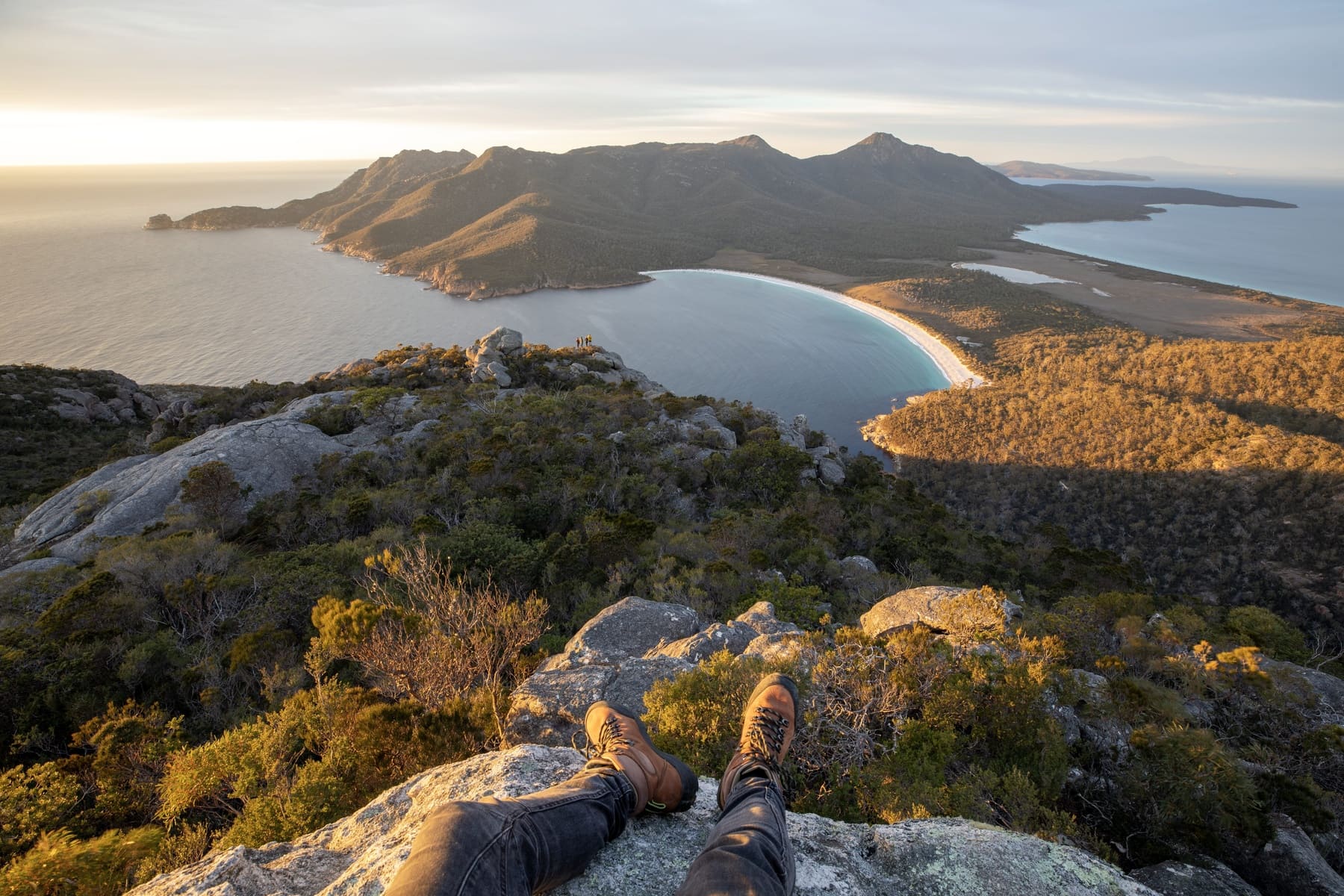
The pattern that surprises visitors is that charging does not track fame. Some internationally known landscapes charge nothing to enter, because there is no gate, no staffed entrance and no infrastructure to fund. Some relatively quiet parks charge, because they have a developed campground, a maintained access road and a visitor facility that has to be paid for somehow.
Once you see the logic, it becomes a planning tool rather than a source of resentment. The charge is generally attached to infrastructure and to concentration of visitors, not to scenery. A trip built around walking, beaches and lookouts on land outside the charging parks can be very cheap indeed; a trip built around the marquee destinations with visitor centres will pay more, and will also be more crowded.
This is also why the honest answer to "how much does it cost to visit Australian national parks" is a question back: which ones, in which state, and are you sleeping in them. Those three answers determine the charge far more than the length of the trip does.
What this means for a road trip budget
Park charges sit in the smaller half of an Australian road trip budget, alongside fuel, and they behave the same way: they scale with how many places you enter rather than with how far you drive. The larger lines are accommodation and paid experiences, and those are decided by different logic entirely.
Two habits keep the park line under control without any sacrifice. The first is to know which of your intended stops are free, which is more of them than most itineraries assume. The second is to decide whether an annual or holiday pass is worth it before you buy the first day ticket, rather than after — the arithmetic only works if the pass period matches the part of the trip that is inside that jurisdiction.
For the wider picture of where money goes on an Australian trip, the cost structure of an Australian road trip sets out the categories and how each one behaves. Park entry is one line in that, and a smaller one than most people fear.
The state you are in follows from where you collect the vehicle
There is a planning shortcut buried in all of this. Because the charging regime is jurisdictional and the jurisdictions are geographic, the state whose parks agency you need to read is decided by where you start and which way you drive. A loop out of one city may touch one jurisdiction or three, and knowing which before you book changes both the reading list and the route.
That is why the useful thing to look at first is not a fees page but a map of the depot network — eleven Australian pickup cities spread across every mainland state and Tasmania. Which city you collect in sets the first jurisdiction, and the direction you leave in sets the rest. Read the parks agency for each one you will cross, and the charges stop being a surprise.
The general rule is worth stating once more, because it is the whole article: there is no national park entry fee in Australia. There are eight systems, plus a Commonwealth one, and the only current source for any of them is the agency that runs it.
Questions people ask
- Is there a national park pass for all of Australia?
- No. Each state and territory sets its own entry charges and issues its own passes, and a pass bought in one jurisdiction is generally not valid in another. A small number of parks are managed by the Commonwealth through Parks Australia and publish their own arrangements. Plan to check one agency per jurisdiction your route crosses.
- Do you have to pay to enter national parks in Australia?
- Sometimes. Many parks charge nothing to enter, and charging tends to follow infrastructure and visitor concentration rather than fame. Whether a specific park charges is decided by the state agency that manages it, and it can differ between parks in the same state, so the park's own page is the only reliable answer.
- Does a park entry pass include camping?
- Usually not. Entry and camping are normally separate charges, and at popular parks they are separate bookings with their own release schedules. A reader who checks only the fees page will often arrive believing they are sorted when they have no site. Check the campground listing itself, not the entry page.
- How much does it cost to visit Australian national parks?
- This page publishes no figure, because the answer depends on which parks, in which state, and whether you are sleeping in them. Entry charges are set per jurisdiction and reviewed periodically, and camping is charged separately. The parks agency for each state on your route publishes the current position, and that is the only source that stays correct.
- Is an annual parks pass worth buying?
- Only if the pass period covers the part of your trip that sits inside that one jurisdiction, and only if the parks on your list are ones that charge. Do the arithmetic before buying the first day pass rather than after, and remember that a pass for one state does nothing for the next state on your route.
Where these facts come from
- Wicked Campers — campervan hire locations
- NSW National Parks and Wildlife Service — park entry fees
- Parks Victoria — entry and camping fees
- Queensland Parks and Wildlife Service — camping fees and bookings
- Parks and Wildlife Service WA — park entry fees
- National Parks and Wildlife Service South Australia — park entry
- Tasmania Parks and Wildlife Service — park entry passes
- NT Parks and Wildlife — park entry and camping fees
- Parks Australia — entry and permits
Details like booking rules, fees and closures change. Check the authority above before you rely on any of it for a specific date.